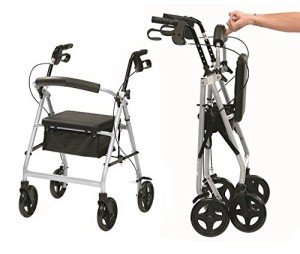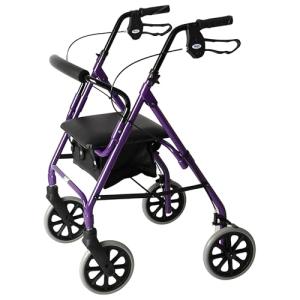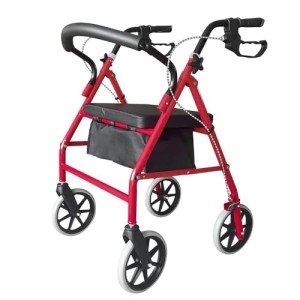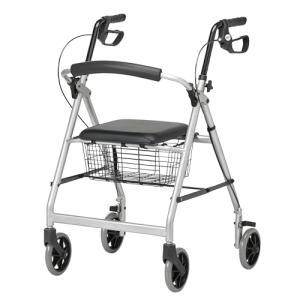

For individuals facing challenges with balance, stamina, or mobility, the world can sometimes feel like it is shrinking. However, the advancement of assistive technology has provided a bridge to independence. One of the most effective tools in modern rehabilitative care and elderly support is the lightweight folding 4-wheel mobility walker with a seat—commonly referred to as a "rollator."
This guide explores the design, benefits, and technical considerations of these devices, providing a detailed overview for caregivers, medical professionals, and users looking to regain their freedom of movement.
Understanding the 4-Wheel Mobility Walker
A 4-wheel mobility walker differs from a traditional "standard" walker. While standard walkers require the user to lift the device with every step or slide it across the floor, a 4-wheel rollator features wheels on all four legs. This design allows for a fluid, continuous walking motion.
The integration of a built-in seat and a folding mechanism adds layers of utility that standard frames lack. These devices are engineered to support users who can walk but may need to rest frequently or require assistance with stability over long distances.
Key Components of a Lightweight Rollator
- The Frame: Usually constructed from high-grade aluminum, the frame balances structural integrity with a low physical weight.
- The Braking System: Hand-operated loop brakes allow the user to control speed and lock the wheels in place when sitting.
- The Padded Seat and Backrest: These provide a mobile resting station, ensuring the user is never too far from a place to sit.
- The Wheels: Typically ranging from 6 to 8 inches, these wheels are designed for both indoor and outdoor surfaces.
- Storage Solutions: Most models include a basket or pouch beneath or in front of the seat for personal items.
Technical Specifications: Standard vs. Lightweight Models
When selecting a mobility aid, weight is a critical factor. A device that is too heavy becomes a hindrance for the user or their caregiver when it needs to be transported in a vehicle.
Table 1: Comparison of Common Walker Types
| Feature | Standard Walker (No Wheels) | Heavy-Duty Steel Rollator | Lightweight Aluminum Rollator |
|---|---|---|---|
| Average Weight | 5 – 7 lbs | 20 – 25 lbs | 11 – 15 lbs |
| Weight Capacity | 250 – 300 lbs | 400 – 500 lbs | 250 – 300 lbs |
| Portability | High (Foldable) | Moderate (Heavy to lift) | Excellent (Foldable & Light) |
| Primary Use | Short distances/Indoor | Bariatric/Outdoor | Versatile/All-terrain |
| Seat Included | No | Yes | Yes |
The Benefits of a Lightweight Folding Design
The primary goal of a mobility aid is to facilitate movement without adding unnecessary stress to the body. The "lightweight" and "folding" aspects of these walkers serve several specific purposes:
1. Ease of Transport and Storage
A folding walker can be collapsed into a compact shape with a single pull of a strap or a click of a button. This allows the device to fit into the trunk of a car, the backseat, or even overhead compartments on public transport. For individuals who live in smaller apartments, the ability to tuck the walker into a closet when not in use is a significant spatial advantage.
2. Reduced Physical Strain
For users with arthritis or limited upper body strength, maneuvering a heavy steel frame can be exhausting. An aluminum lightweight model requires minimal effort to steer and turn, reducing fatigue in the arms and shoulders.
3. Promoting Active Lifestyles
Knowing there is a seat available at any moment encourages users to walk further. Whether navigating a grocery store or a local park, the psychological comfort of a "guaranteed chair" helps reduce the anxiety associated with falling or becoming overtired in public.
4. Safety and Stability
Four wheels provide a wider base of support than two wheels or no wheels. When combined with locking hand brakes, the walker becomes a stable platform that helps prevent falls during transitions from standing to sitting.
How to Choose the Right Model
Not all walkers are created equal. To ensure the best fit, several factors must be measured and evaluated.
Necessary Measurements
- Handle Height: The handles should be at the level of the user's wrists when their arms are hanging naturally at their sides.
- Seat Height: The user’s feet should rest flat on the floor when sitting.
- Width: The walker must be narrow enough to pass through the doors in the user's home (standard bathroom doors are often narrower than main entryways).
Table 2: Wheel Size and Terrain Compatibility
| Wheel Size | Best For | Pros | Cons |
|---|---|---|---|
| 6-inch Wheels | Indoor use, smooth floors | Highly maneuverable in tight spaces | Struggles on grass or cracked sidewalks |
| 7.5 to 8-inch Wheels | Hybrid (Indoor/Outdoor) | Best all-around performance | Adds slightly more weight to the device |
| 10-inch Wheels | Rugged outdoor terrain | Easily glides over gravel and grass | Can feel bulky indoors |
Maintenance and Safety Tips
To ensure the longevity of a 4-wheel walker and the safety of the user, regular maintenance is required.
- Check the Brakes Regularly: Over time, brake cables can stretch. Ensure that when the handles are squeezed, the brakes grip the wheels firmly.
- Inspect the Folding Mechanism: Ensure no debris or dirt is lodged in the hinges, which could prevent the device from locking securely in the open position.
- Wipe Down the Seat: Use a damp cloth to clean the seat and backrest to prevent the buildup of bacteria or grime.
- Tighten Bolts: Monthly checks of the bolts on the wheels and handles will prevent wobbling.
Safety List: Do’s and Don’ts
- DO lock the brakes before sitting down.
- DO walk inside the frame of the walker, not behind it.
- DON’T use the walker as a wheelchair (unless it is a specific hybrid model).
- DON’T hang heavy bags on the handles, as this can cause the walker to tip backward.
Frequently Asked Questions (FAQ)
1. Is a lightweight walker sturdy enough for outdoor use?
Yes. Most lightweight aluminum walkers are designed to handle paved paths, sidewalks, and flat outdoor surfaces. However, for very rugged terrain, models with larger 8-inch wheels are recommended.
2. What is the difference between a walker and a rollator?
A "walker" typically refers to a frame without wheels or with only two front wheels. A "rollator" has four wheels, a seat, and hand brakes. The term "4-wheel walker with a seat" is synonymous with a rollator.
3. Will Medicare or insurance cover the cost?
In many cases, Medicare Part B covers walkers and rollators as Durable Medical Equipment (DME) if prescribed by a doctor as medically necessary. It is advisable to check with specific insurance providers for coverage details.
4. Can the height of the walker be adjusted?
Almost all modern 4-wheel walkers feature adjustable handles. Some also offer adjustable seat heights. Always check the product specifications to ensure the adjustment range meets the user’s height.
5. How do I know if the walker is too heavy for me?
If the user or their primary caregiver cannot lift the folded device into a vehicle without significant straining, it may be too heavy. Most "lightweight" models weigh between 12 and 18 pounds.
The lightweight folding 4-wheel mobility walker with a seat represents a significant leap forward in personal mobility. By combining the durability of modern materials with ergonomic design, these devices offer more than just physical support—they offer the psychological boost of independence.
When selecting a model, prioritizing a balance between weight and wheel size will ensure the walker meets the specific environmental needs of the user. With proper maintenance and correct usage, a high-quality rollator can be a life-changing investment, ensuring that the world remains accessible to everyone, regardless of their physical limitations.