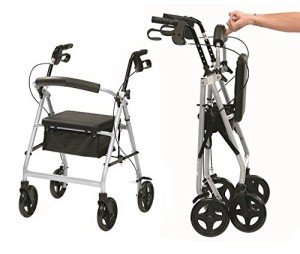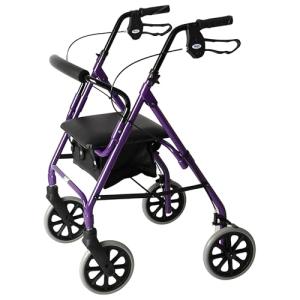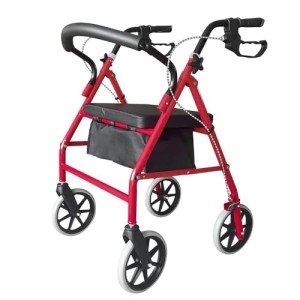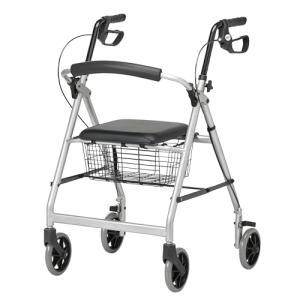





For many individuals facing mobility challenges, the world can sometimes feel like it is shrinking. Whether due to aging, recovery from surgery, or chronic conditions like arthritis, the simple act of walking to the park or navigating a grocery store can become a daunting task. However, the introduction of the lightweight folding four-wheel rollator with a seat has revolutionized personal mobility.
Combining stability, comfort, and portability, these devices are more than just walking aids; they are tools for independence. This guide explores the features, benefits, and technical considerations of modern rollators, helping users and caregivers make informed decisions.
What is a Four-Wheel Rollator?
A four-wheel rollator is a sophisticated evolution of the traditional walker. While a standard walker requires the user to lift the device with every step or slide it across the floor, a rollator features wheels on all four legs. This design allows for a fluid, continuous walking motion. More importantly, rollators are equipped with built-in seats and hand brakes, providing a mobile resting station wherever the user goes.
Key Differences Between Walkers and Rollators
To understand why a four-wheel rollator is often the preferred choice, it is helpful to compare it to the traditional stationary walker.
| Feature | Standard Walker | Four-Wheel Rollator |
|---|---|---|
| Movement | Must be lifted or pushed | Rolls smoothly on four wheels |
| Gait | Step-by-step (slower) | Continuous walking gait (faster) |
| Integrated Seat | Rarely included | Standard feature for resting |
| Braking System | None | Hand-operated loop brakes |
| Terrain | Best for indoor/flat surfaces | Versatile (indoor and outdoor) |
| Storage | Limited | Often includes bags or baskets |
The Advantage of "Lightweight" and "Folding"
The two most critical adjectives in the world of modern mobility aids are "lightweight" and "folding." In the past, rollators were often heavy, cumbersome steel structures that were difficult to lift into a car trunk. Modern engineering has changed this.
1. Advanced Materials
The transition from steel to high-grade aluminum or carbon fiber has significantly reduced the weight of these devices. A typical lightweight rollator weighs between 13 and 18 pounds, yet it can support user weights of up to 300 pounds or more. This makes it manageable for elderly users or those with limited upper-body strength to handle the device independently.
2. The Folding Mechanism
Portability is a cornerstone of an active lifestyle. Most modern four-wheel rollators feature a "side-to-side" or "cross-fold" design. By pulling a handle on the seat, the device collapses into a compact shape. This allows it to:
- Fit easily into the backseat or trunk of a car.
- Be stored discreetly in restaurants or theaters.
- Stand upright when folded to save space in narrow hallways.
Essential Features to Consider
When selecting a rollator, it is important to look beyond the aesthetics. The following features determine the safety and comfort of the user.
Ergonomic Hand Grips and Brakes
The handles should be contoured to fit the natural shape of the hand, reducing pressure on the palms. The braking system is equally vital. "Loop-lock" brakes allow the user to pull up to slow down while walking or push down to lock the wheels in place when sitting.
Adjustable Height
Proper posture is essential to prevent back and shoulder pain. A high-quality rollator will feature adjustable handles. When the user’s arms are hanging at their sides, the handles should be at the level of their wrists.
Wheel Size and Material
- 6-inch wheels: Best for indoor use and smooth pavements.
- 8-inch wheels: The "gold standard" for all-terrain use, easily navigating grass, gravel, and cracked sidewalks.
- Non-marring tires: Ensure that the wheels do not leave black scuff marks on indoor flooring.
The Padded Seat and Backrest
The seat is perhaps the most significant benefit of a rollator. It provides an immediate place to rest for those who suffer from shortness of breath or fatigue. A wide, padded seat paired with a flexible or padded backrest ensures that the user can rest comfortably and safely.
Technical Specifications: What a Standard High-Quality Model Looks Like
For those looking at specific models, here is a breakdown of what to expect from a premium lightweight folding rollator.
| Specification | Typical Measurement |
|---|---|
| Frame Material | Aluminum Alloy |
| Unit Weight | 15.5 lbs - 17 lbs |
| Weight Capacity | 300 lbs (Standard) / 450 lbs (Bariatric) |
| Handle Height Range | 31" – 37" (Adjustable) |
| Seat Dimensions | 18" (W) x 10" (D) |
| Wheel Diameter | 8 inches |
| Folded Width | Approx. 10 - 12 inches |
Who Benefits Most from a Four-Wheel Rollator?
While rollators are versatile, they are specifically designed for individuals who have enough balance to keep the device from rolling away but lack the endurance to walk long distances without a break.
- Individuals with Chronic Respiratory Issues: Conditions like COPD can make long walks exhausting. Having a seat available at all times provides peace of mind.
- Seniors with Mild Balance Issues: The four wheels provide a steadying influence that encourages a more natural walking rhythm.
- Post-Operative Patients: Those recovering from hip or knee replacements often transition from a walker to a rollator as their strength returns.
- Individuals with Arthritis: The ergonomic grips and easy-to-use brakes help those with limited hand dexterity.
Safety Tips for Using a Rollator
To maximize the benefits of a rollator, one must use it correctly. Improper use can lead to falls or strain.
- Don't "Walk Behind" It: Many users push the rollator too far in front of them. The user should walk inside the framework of the rollator, staying close to the seat.
- Always Lock the Brakes Before Sitting: Never attempt to sit down unless the brakes are clicked into the "locked" position.
- Sit with Back to the Backrest: Users should always turn around and sit with their back against the backrest. A rollator is NOT a wheelchair; it should never be pushed while someone is sitting on it.
- Check the Terrain: Even with 8-inch wheels, users should be cautious of deep sand, thick mud, or very steep inclines.
Maintenance for Longevity
To ensure the rollator remains safe and functional, a few simple maintenance tasks should be performed regularly:
- Tighten Bolts: Periodically check that all screws and adjustment knobs are tight.
- Clean the Wheels: Wipe down wheels to remove hair, lint, or dirt that could jam the axles.
- Test the Brakes: Ensure the brakes engage firmly and do not slip.
- Check the Fabric: Inspect the seat and storage bag for any fraying or tears.
The lightweight folding four-wheel rollator with a seat represents a perfect marriage of form and function. By reducing the physical effort required to walk and providing the security of a mobile seat, it empowers individuals to engage with their communities, attend family events, and enjoy the outdoors. For those seeking a blend of stability and portability, this mobility aid is an investment in both physical health and emotional well-being.
Frequently Asked Questions (FAQ)
1. Does Medicare cover the cost of a four-wheel rollator?
In many cases, yes. Medicare Part B may cover rollators as Durable Medical Equipment (DME) if they are deemed "medically necessary" and prescribed by a doctor. Coverage typically pays for 80% of the Medicare-approved amount after the deductible is met.
2. Can I use a rollator as a wheelchair?
No. A standard rollator is not designed to be pushed while a person is seated on it. The frame and wheels are built for walking support. Pushing someone on a rollator can lead to the frame collapsing or the user falling over. For that functionality, one should look for a "Hybrid Rollator/Transport Chair."
3. How do I know what seat height I need?
When sitting, your feet should be flat on the floor. If the seat is too high, your feet will dangle, creating pressure behind the knees. If it is too low, it may be difficult to stand back up. Most rollators come with a standard seat height of 18-22 inches, but "petite" and "tall" models are also available.
4. Are these suitable for use inside a small apartment?
Yes, however, users should measure their doorways first. Most rollators are between 22 and 26 inches wide. The folding feature is particularly useful in small spaces, as the rollator can be partially "nipped" or narrowed to pass through very tight bathroom doors.
5. What is the difference between 3-wheel and 4-wheel rollators?
3-wheel rollators are generally lighter and have a tighter turning radius, making them great for small indoor spaces. However, they are less stable than 4-wheel models and almost never include a seat. 4-wheel rollators are the preferred choice for those who need a place to rest.