Looking for wheelchair ramps? You’re in the right place! These ramps make getting in and out of your home or vehicle a breeze, offering safe and easy access for everyone. Whether you need a portable option for trips or a sturdy one for everyday use, we’ve got you covered with a variety of choices to fit your needs.
Wheelchair Ramps
Discover the perfect solution for easy access to any space with our range of wheelchair ramps
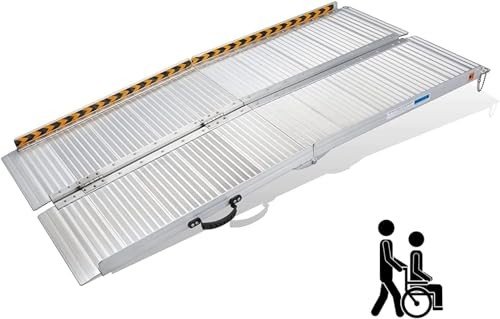
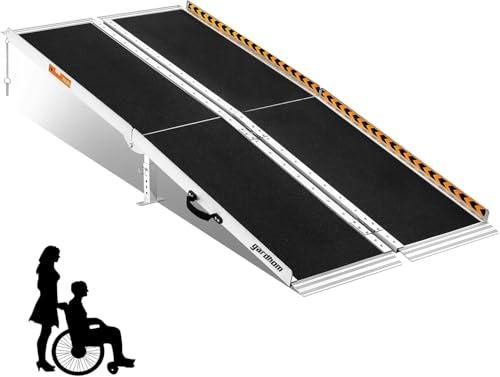
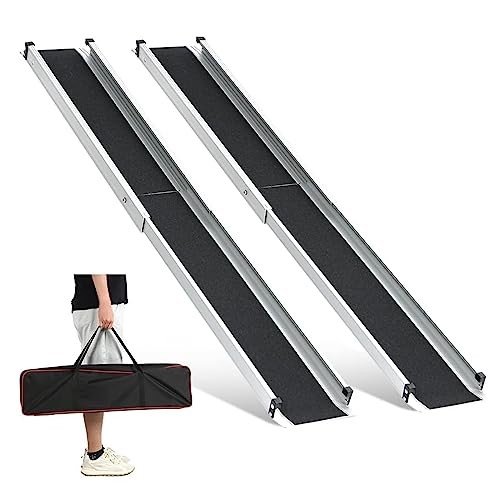
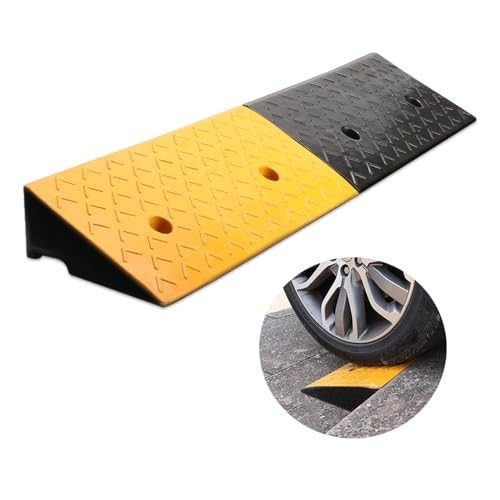
Product List
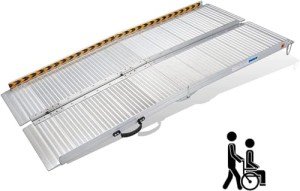
Folding Aluminum Wheelchair Ramp
Gardhom
Product Review Score
4.76 out of 5 stars
104 reviews$245.87
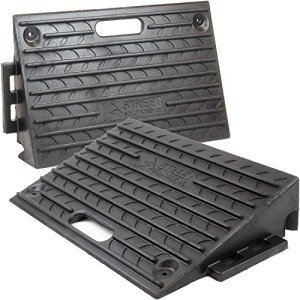
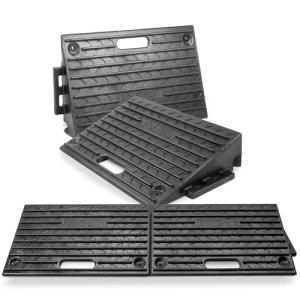
Heavy Duty Mobility Ramps
Street Solutions Uk
Product Review Score
4.18 out of 5 stars
44 reviews$59.64
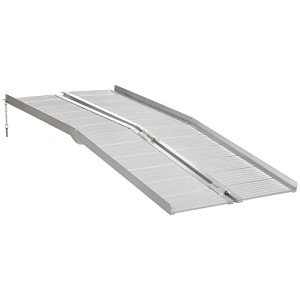
Folding Aluminum Wheelchair Ramp
Homcom
Product Review Score
4.86 out of 5 stars
130 reviews$140.43

Folding Aluminum Ramp for Mobility
The Ramp People
Product Review Score
4.47 out of 5 stars
99 reviews
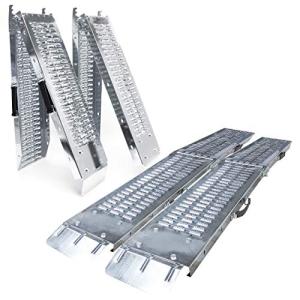
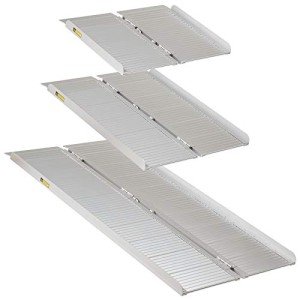

4ft Folding Wheelchair Ramp
The Ramp People
Product Review Score
4.22 out of 5 stars
171 reviews$197.24
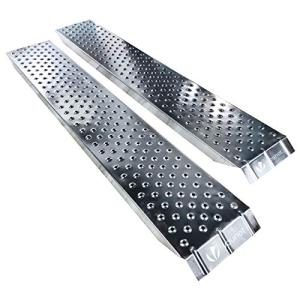
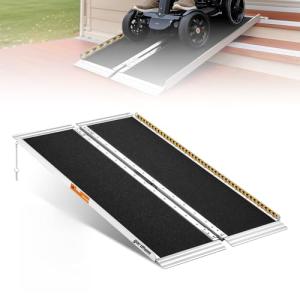
Foldable Aluminum Wheelchair Ramp
Gardhom
Product Review Score
4.24 out of 5 stars
133 reviews$176.16 $166.88

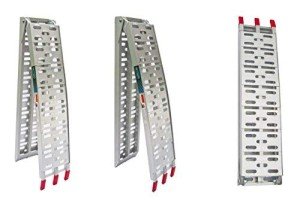
Folding Aluminium Loading Ramps
The Ramp People
Product Review Score
4.68 out of 5 stars
191 reviews
Accessibility is more than just a legal requirement; it is a fundamental aspect of creating an inclusive society where everyone, regardless of mobility limitations, can navigate the world with dignity and ease. Among the various tools designed to bridge the gap between barriers and freedom, wheelchair ramps stand out as one of the most essential. Whether for a private residence, a commercial business, or a public space, understanding the nuances of wheelchair ramps—from materials and design to legal regulations—is vital for ensuring safety and functionality.
The following guide provides a comprehensive overview of wheelchair ramps, offering detailed insights into types, materials, safety standards, and selection criteria.
The Importance of High-Quality Accessibility
For individuals who use wheelchairs, power chairs, or walkers, a single step can represent an insurmountable barrier. Wheelchair ramps provide a smooth transition between different elevations, allowing for independent movement. Beyond the physical benefit, these structures foster social inclusion, ensuring that users can access shops, homes, and community centers.
In the United States, the Americans with Disabilities Act (ADA) has set the gold standard for ramp design. While these guidelines are mandatory for public and commercial spaces, they cũng serve as an excellent blueprint for residential installations to ensure maximum safety.
Types of Wheelchair Ramps
Wheelchair ramps are not one-size-fits-all. They are categorized based on their mobility, installation method, and intended duration of use.
1. Permanent Ramps
Permanent ramps are built into the ground or attached to a structure for long-term use. Usually constructed from concrete, wood, or steel, these ramps require professional installation and often involve local building permits. They are the most durable option but are also the most expensive and least flexible.
2. Semi-Permanent/Modular Ramps
Modular ramps are typically made of high-grade aluminum. They consist of pre-manufactured sections that can be bolted together. These are ideal for residents who may need the ramp for a few years or for businesses that want a sturdy solution that can be disassembled if the business moves.
3. Portable Ramps
Designed for travel or temporary obstacles, portable ramps are lightweight and often foldable. Common sub-types include:
- Suitcase Ramps: Fold in half and feature a handle for easy carrying.
- Multifold Ramps: Fold into several sections to tackle higher rises while remaining compact.
- Roll-Up Ramps: Highly portable ramps that can be rolled like a carpet.
4. Threshold Ramps
These are small wedges or bridges designed to overcome tiny rises, such as door lintels, sliding glass door tracks, or small curbs. They are usually made of rubber or aluminum.
Comparing Ramp Materials
The material chosen for a ramp affects its cost, maintenance requirements, and longevity. The table below compares the most common materials used in wheelchair ramp construction.
Table 1: Wheelchair Ramp Material Comparison
| Material | Durability | Maintenance Needs | Weather Resistance | Best For |
|---|---|---|---|---|
| Aluminum | High | Very Low | Excellent (Rust-resistant) | Residential and Modular use |
| Wood | Medium | High (Painting/Sealing) | Fair (Prone to rot) | Permanent residential setups |
| Concrete | Very High | Low | Excellent | Permanent public/commercial use |
| Steel | High | Medium (Can rust) | Good (if treated) | Heavy-duty industrial use |
| Rubber | High | Low | Great | Thresholds and small steps |
ADA Guidelines and Safety Standards
For a ramp to be truly safe and accessible, it must adhere to specific geometric standards. The most critical measurement is the "slope" or "pitch."
The 1:12 Slope Ratio
The ADA requires a 1:12 slope ratio for commercial ramps. This means that for every 1 inch of vertical rise, there must be 12 inches (1 foot) of ramp length. A steeper ramp is dangerous because it requires excessive physical strength to ascend and poses a tipping risk during descent.
Key Specifications to Remember:
- Minimum Width: The ramp must be at least 36 inches wide between handrails.
- Landing Size: Landings must be at least 60 inches long and at least as wide as the ramp. If the ramp changes direction, the landing must be at least 60 inches by 60 inches.
- Maximum Run: A single ramp run cannot exceed 30 feet without a landing.
- Handrails: Any ramp with a rise greater than 6 inches must have handrails on both sides.
- Edge Protection: Ramps and landings must have curbs or barriers to prevent wheelchairs from slipping off the edge.
Considerations for Choosing the Right Ramp
When selecting or designing a ramp, several factors must be weighed to ensure the final product meets the user’s specific needs.
1. Vertical Rise
The first step is measuring the "total rise"—the vertical height from the ground to the top landing. This measurement determines how long the ramp must be to achieve a safe slope.
2. Available Space
A 30-inch rise requires a 30-foot ramp under ADA guidelines. Many properties do not have a straight 30-foot path. In these cases, a "switchback" or "L-shaped" design with landings is necessary.
3. Weight Capacity
The ramp must support the combined weight of the user and the mobility device. Heavy power chairs can weigh over 300 lbs alone; therefore, a ramp with a weight capacity of at least 600–800 lbs is generally recommended for residential use.
4. Surface Texture
Slip resistance is non-negotiable.
- Aluminum ramps often feature a "high-traction" or "serrated" surface.
- Wooden ramps should be treated with sand-infused paint or grip tape, as they become very slippery when wet.
Maintenance and Safety Tips
A ramp is only helpful if it is maintained in safe working condition. Regular inspections should include:
- Checking Fasteners: Ensuring bolts and screws are tight, especially on modular and portable units.
- Surface Cleaning: Removing leaves, ice, and debris.
- Checking for Stability: Ensuring modular feet have not sunk into the ground or shifted.
- Refinishing: Re-painting or re-sealing wooden ramps every 1–2 years to prevent rot.
Frequently Asked Questions (FAQ)
What is the ideal slope for a residential wheelchair ramp?
While the ADA mandate is 1:12, some residential users prefer a 1:15 or 1:20 slope if they have limited upper body strength, as it provides a gentler incline that is easier to navigate.
How much does a wheelchair ramp cost?
Costs vary significantly based on material. Portable ramps can cost between £100 and £500. Modular aluminum ramps usually range from £1,000 to £5,000 depending on length. Permanent concrete or custom wood ramps can exceed £5,000 to £10,000 depending on the complexity of the build.
Are building permits required for wheelchair ramps?
For permanent structures (concrete or wood), most local municipalities require a building permit. Modular ramps are often classified as "temporary structures" and may not require a permit, but it is always wise to check local zoning laws first.
Can I build a ramp myself?
While DIY kits and wooden ramp plans are available, it is highly recommended to consult a professional or a contractor familiar with ADA guidelines. An incorrectly built ramp is a significant liability and safety hazard.
How do I calculate the length of the ramp I need?
Measure the total vertical rise in inches. If you want a standard 1:12 slope, convert that number of inches directly into feet. (e.g., A 24-inch rise requires a 24-foot ramp).
Wheelchair ramps are transformative tools that provide freedom of movement and access to essential services. By prioritizing safety through proper slope calculations, selecting the right materials for the environment, and adhering to established accessibility standards, one can ensure that the ramp serves as a reliable bridge to independence. Whether it is a simple threshold ramp for a doorway or a multi-section modular system for a porch, the investment in accessibility is always an investment in the quality of life.